Five artists stood behind five workstations at the Kempton Fairgrounds on September 12, 2026 each facing the same challenge: seven hours, identical piles of steel and the freedom to turn those materials into something completely their own. By the end of the day, those matching piles had become five very different sculptures.
For Kingsley artist Jeremy Werkheiser, founder of Metal Relic, they became “Hunted,” a praying mantis poised above an I-beam while a spider emerges from beneath it. Spectators selected the piece as their favorite in the Fabricator Olympics Metal Art Competition, earning him the event’s Metal Artist of the Year title.
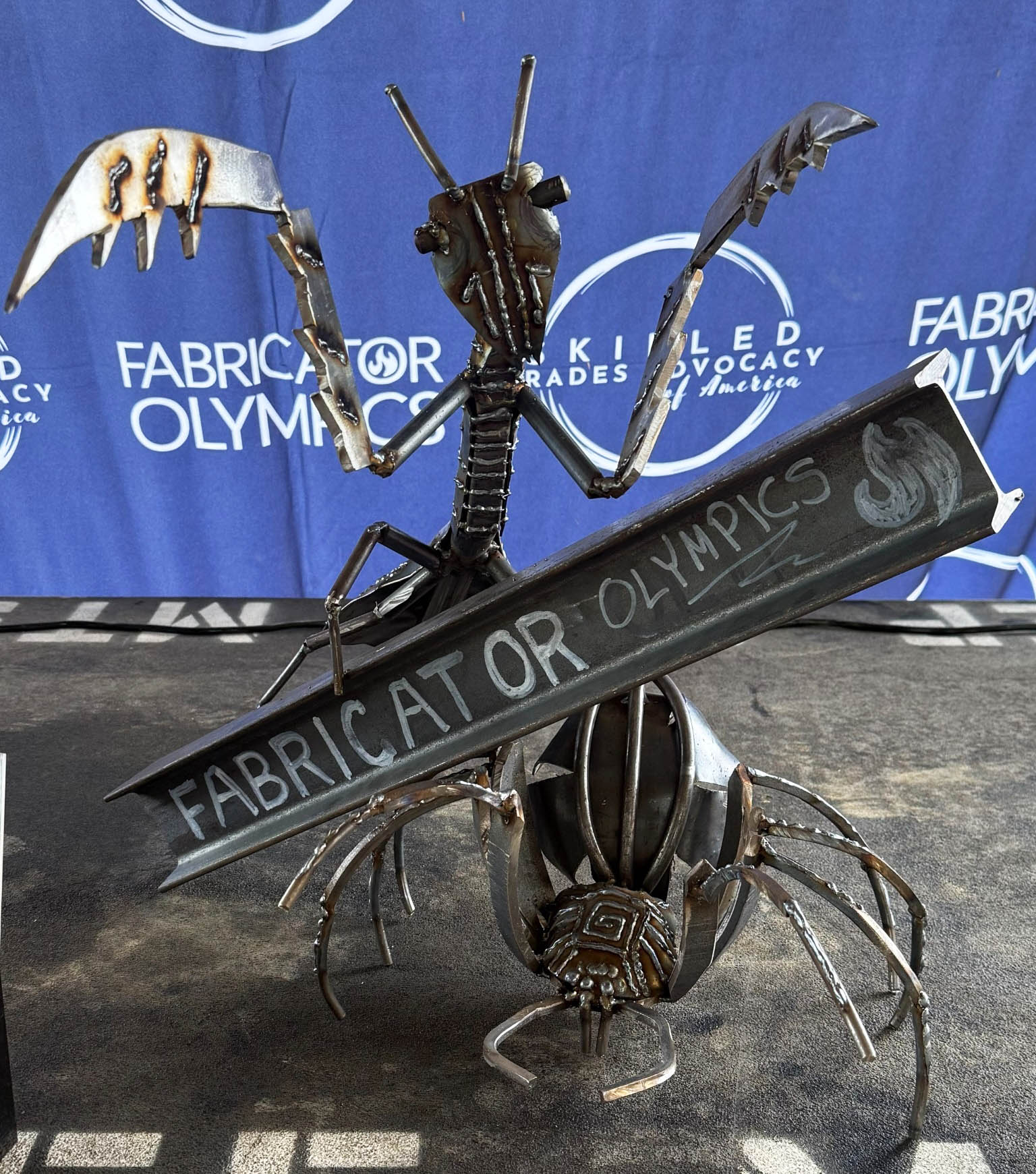
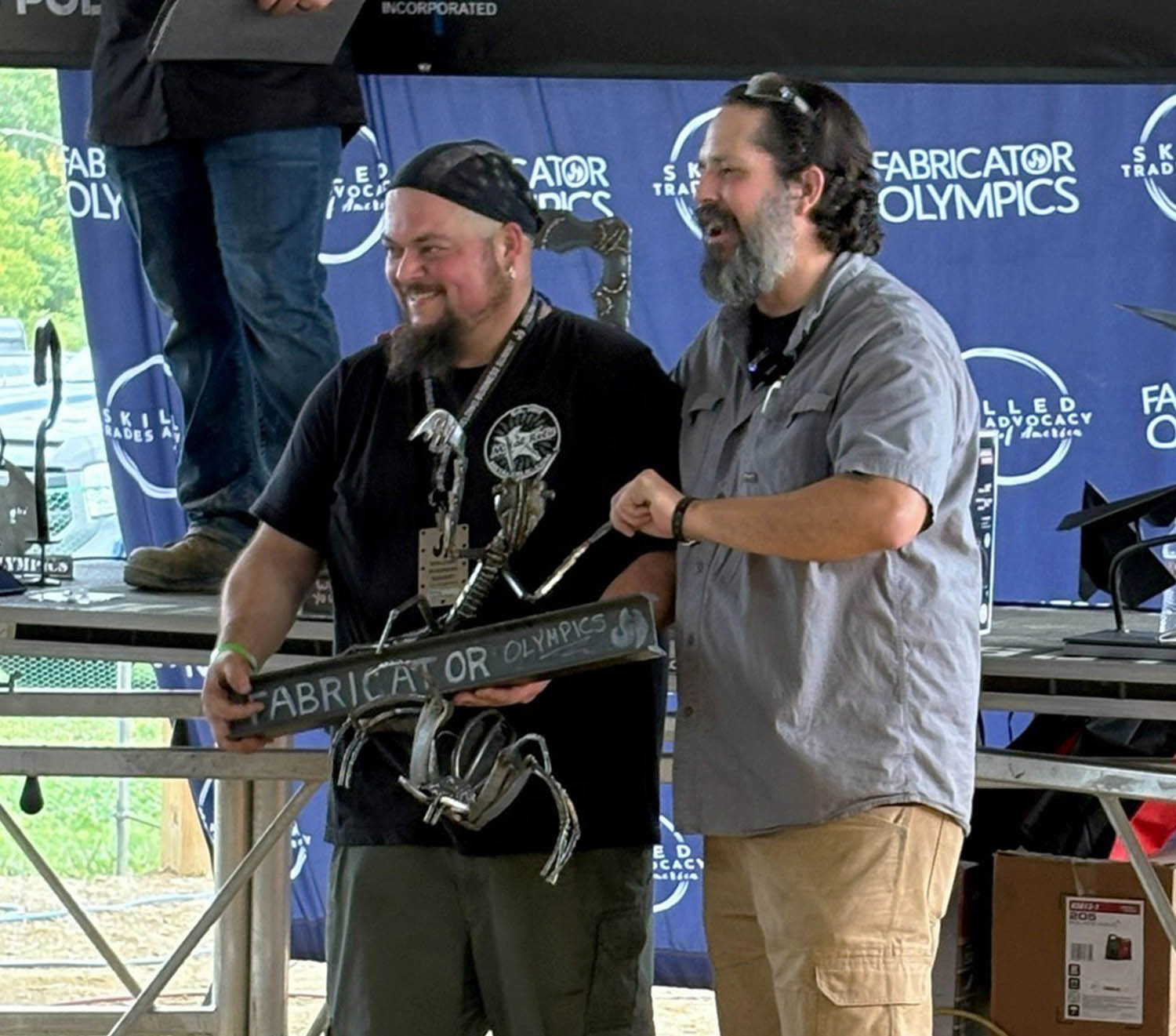
“Hunted,” Werkheiser’s crowd-voted winning sculpture from the 2026 Fabricator Olympics
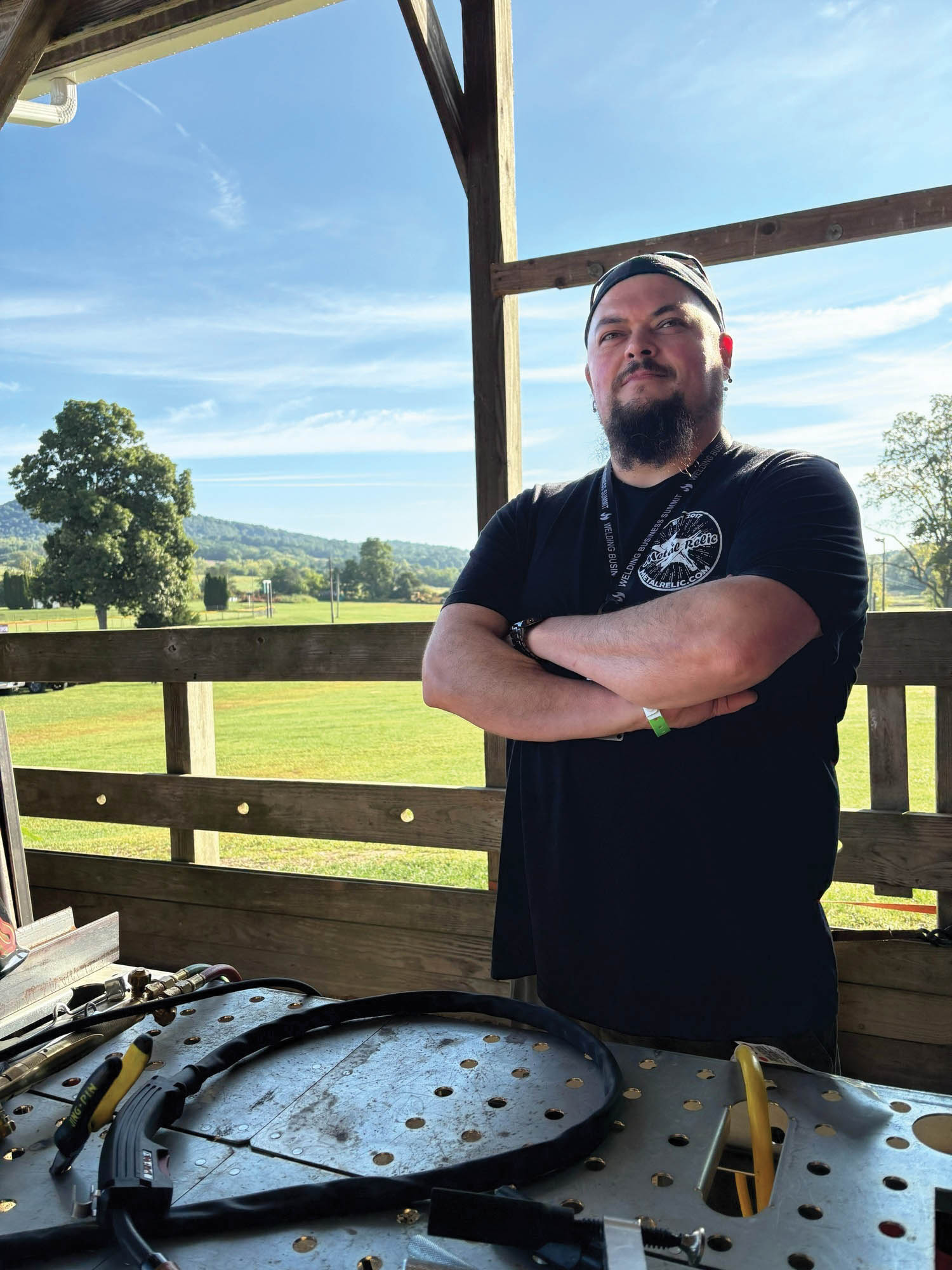
Jeremy Werkheiser, founder of Metal Relic, at the 2026 Fabricator Olympics
The sculpture may have been built in seven hours, but the road that brought him to that workbench had taken considerably longer.
Werkheiser founded Metal Relic in 2017 while working full time in industrial maintenance, eventually moving into management. For years, his metal art developed alongside his career rather than replacing it. He built whenever work and family life allowed, gradually developing the techniques and artistic direction that would become the foundation of Metal Relic.
That balance changed after a difficult stretch beginning with the death of his father, followed a few months later by a devastating house fire. As his family dealt with the aftermath, he stepped down from his management position to better support them and was later fired, bringing an unexpected end to the career he had spent years building.
Rather than walk away from Metal Relic, he began giving it more of his attention. He returned to school through the adult Welding Technology program at the Susquehanna County Career and Technology Center, adding formal training to the fabrication and artistic experience he had already developed.
That decision led to SkillsUSA competition in 2025, where his steel kraken, “The Deep Sleep,” earned district and Pennsylvania state gold medals before receiving bronze in the national Postsecondary Welding Sculpture competition. The roughly 84-pound sculpture, covered with 2,542 individually fabricated scales, represents about 500 hours of work.
In 2026, “The Deep Sleep” was also selected as a first-cycle winner in the Metal My Way competition, helping introduce his work to a broader audience in welding and metal art. The sculpture remains in contention for the competition’s 2026 Grand Prize, which will be announced in a few weeks.
Today, the artist works from an enclosed trailer converted into a studio, with a welding workbench approximately four feet long. From that compact workspace, he continues producing commissioned pieces and increasingly ambitious sculptures while building Metal Relic full time.
Before leaving for Kempton, he had already developed the basic idea for the Fabricator Olympics sculpture, pairing a praying mantis with a spider. Still uncertain about whether he was heading in the right direction, he prayed for a sign. Later the same day, he discovered a live praying mantis caught in a spider’s web at home. He freed the insect, and for Werkheiser, finding the exact two creatures he had been planning to build felt like the confirmation he had asked for.
That idea traveled with him to Kempton for a two-day weekend centered on welding, fabrication and entrepreneurship. On September 11, the day before the Fabricator Olympics, he attended the Welding Business Summit, where speakers and business owners discussed leadership, pricing, customer relationships, job profitability, technology and innovation.
He said the most valuable part of the Summit was hearing people speak openly about the challenges behind their successes and realizing how many of those experiences were shared. “It felt like a Hail Mary pass that I needed and I caught every bit of it,” he said. He described the day as fuel for the competition that followed and told people throughout the weekend that he was there to change his life.
At about 11:00pm that night, back at his hotel after the Summit, he finally put the sculpture on paper. The sketch showed a mantis above an I-beam with a spider underneath and the words “Fabricator Olympics 2026” running across the beam. He folded the drawing and carried it with him throughout the competition the next day.
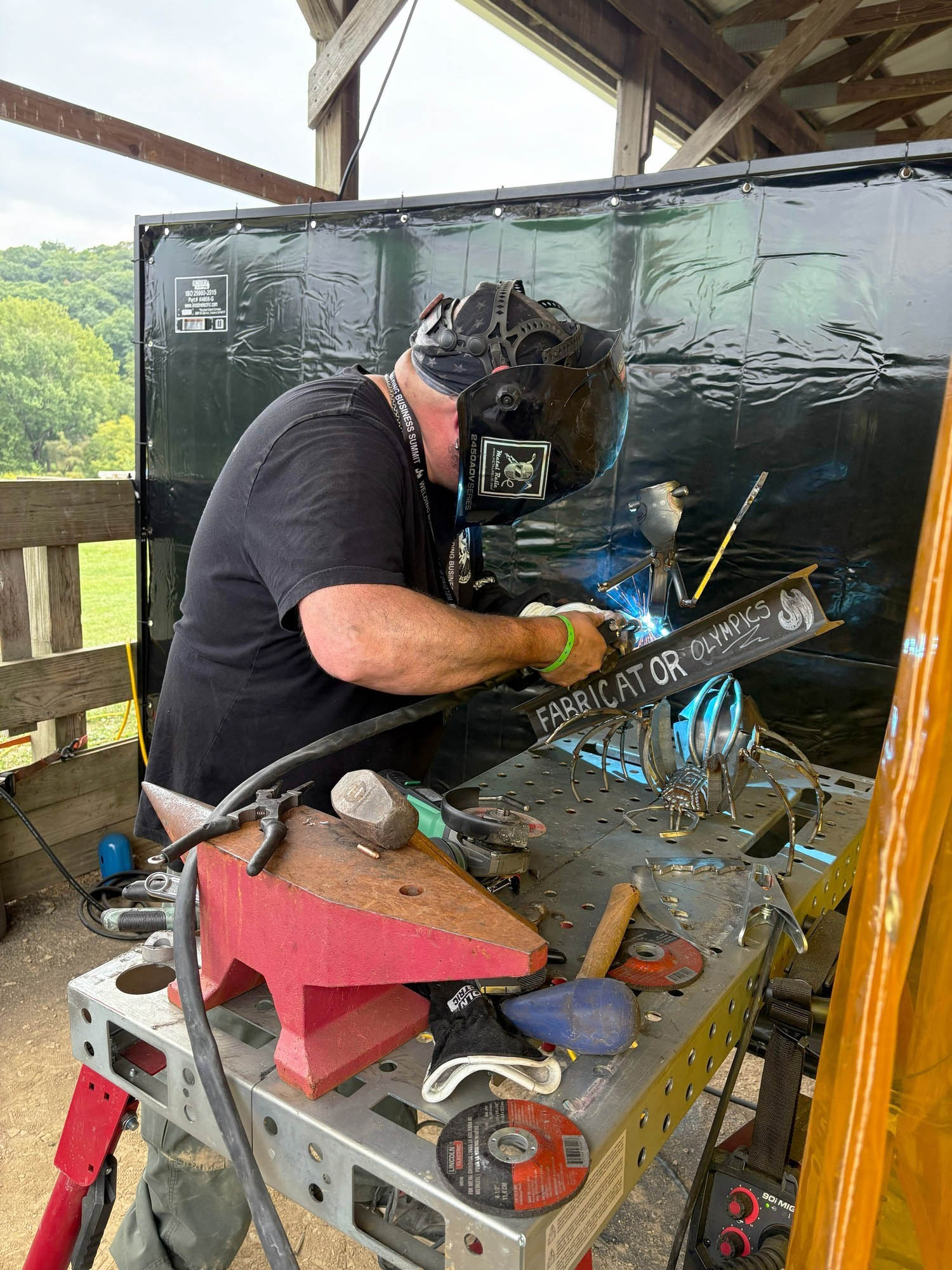
Werkheiser fabricates “Hunted” during the seven-hour live Metal Art Competition
At the Fabricator Olympics, each of the five artists received the same selection of supplied steel and the same seven-hour clock. Their finished sculptures also had to fit within a 2-foot cube.
The common starting point was part of what made the competition unusual. The materials were identical, but each artist saw something different in them.
The day also gave Werkheiser an opportunity to meet internationally recognized metal sculptor David Madero, whom he had admired for years. Madero, known in part for serving as a judge on Netflix’s “Metal Shop Masters,” spent time talking with him about metal art and his work. For the Kingsley artist, having the chance to speak with someone he considered a hero in the field became another memorable part of an already significant weekend.
Jeremy Werkheiser with metal sculptor David Madero at the 2026 Fabricator Olympics
Spectators were able to walk through the competition area throughout the day, watch the work take shape and ask the artists questions as they worked. With that interaction in mind, he first established the basic armature and overall silhouette so visitors could begin to understand what he was building before many of the details existed.
He focused early on the mantis’s raised raptorial forelegs. Building those grasping front limbs first gave the sculpture an identity while much of the body was still an exposed framework of steel.
As the hours passed, the mantis gained a head, abdomen, wings and legs. The supplied I-beam became part of the setting itself, dividing the sculpture into two levels. Beneath it, the second predator began to emerge as a spider moving toward the viewer.
The title “Hunted” reflects the tension between the two creatures. Both are predators, and their positioning leaves the viewer to decide which one has the advantage and which may actually be the hunted.
During the build, another live praying mantis appeared on a post near his work area. After the encounter at home just two days earlier, the coincidence drew plenty of attention and added another layer of meaning to a sculpture whose story had already begun before the competition.
When the seven-hour build concluded, each attendee received one voting card to select a favorite sculpture. The piece received the crowd vote, earning its creator the Metal Artist of the Year title and a Lincoln Electric 90i MIG welder.
The contrast with “The Deep Sleep” was striking. One sculpture represented roughly 500 hours of work, while the Fabricator Olympics piece had to be built and finished in just 7.
For the artist, the challenge was not simply working faster. It was deciding which forms, details and fabrication choices mattered most when there was no time to revisit them.
The Fabricator Olympics, organized by Kevin and Melissa Johnson, also included fabrication competitions, a welding rig show and other activities centered on the skilled trades. The event brought together professional fabricators, business owners, artists, students and spectators from across the industry.
The competition sculptures are slated to be auctioned through Skilled Trades Advocacy of America, with proceeds helping provide tools to people entering careers in the trades.
That mission carries particular meaning for Werkheiser after his own return to school and the opportunities that followed it.
“As I find my footing, I want to help others find theirs,” he said.
He continues to create original steel sculpture and bespoke commissions through Metal Relic in Northeastern Pennsylvania. His work ranges from smaller decorative pieces to detailed creatures and larger sculptural projects.
Werkheiser is also a member of Artists’ Open House Weekend, where visitors will have an opportunity to see his work in person during the organization’s 30th annual tour, October 10-12, 2026, throughout Susquehanna County.
Tour information, participating artists and locations are available at ArtistsTour.com. More of his work and information about Metal Relic can be found at MetalRelic.com.